Protecting hearing in the world of opera
Opera is synonymous with powerful voices and rich orchestral sound. But behind its beauty lies a potential risk: prolonged exposure to high sound levels can affect hearing health. Until recently, there was little comprehensive data on how professional opera musicians and singers are impacted.
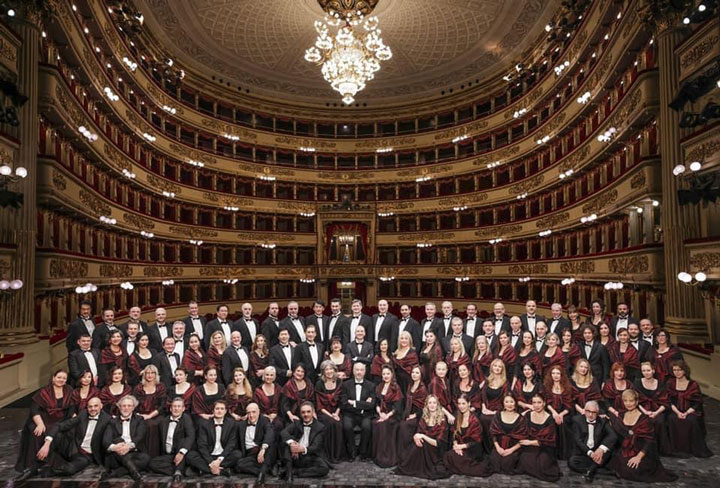
The Scala Study, launched at the iconic Teatro alla Scala in Milan, set out to change that. With the support of Interacoustics instruments and the involvement of the local Italian distributor Lediso, the study aimed to systematically assess hearing health among orchestra musicians.
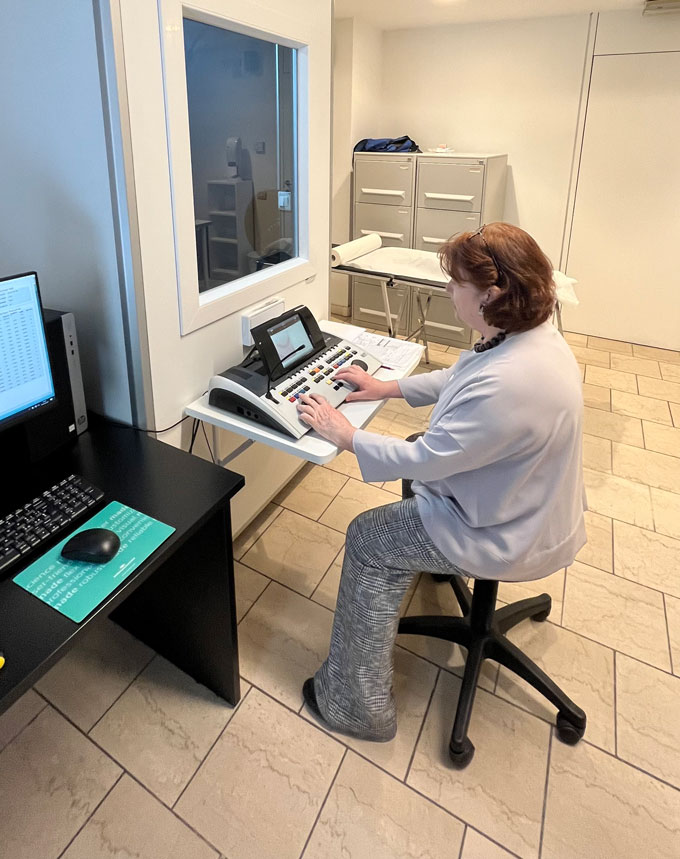
Hearing assessments with Interacoustics equipment
The study was conducted on 107 orchestra musicians who underwent detailed ear examinations and hearing assessments using a range of Interacoustics instruments. These included the Lyra OAE device, the AC40 audiometer, the Viot™ video otoscope, and the AT235 tympanometer. Testing was performed by audiologists and final-year university students from Policlinico di Milano, and the collected data were compared against ISO 1999:2015 standards to evaluate hearing thresholds relative to population norms.
Dr. Orietta Calcinoni, ENT specialist and phoniatrician, has been closely involved in the Scala Theatre study. She explains that choir artists have been assessed at the time of hiring for some years, while the hearing thresholds of orchestra musicians have been monitored every three years since 2009:
“This first study focuses specifically on orchestra professors. A separate article on choir artists is planned for 2026, ensuring a three-year follow-up for them as well, using Interacoustics equipment provided by Lediso,” she says.
Lediso is proud to be part of the project. Fabricio Lencioni, Sales Manager at Lediso, highlights the importance of the collaboration:
“I have a long-standing working relationship and friendship with Dr. Orietta Calcinoni, who oversees the testing and screening. We are excited to be part of this study and are happy that we’ve been able to provide the relevant equipment which has made it possible to test the staff.”
High noise exposure but lower risk of hearing loss than expected
The results of the study, now published in La Medicina del Lavoro, offer valuable insights [1]. Noise exposure was found to be high, frequently exceeding 87 dB(A), particularly among violinists and brass players. Despite this, the overall risk of hearing loss was lower than expected when compared to industrial workers exposed to similar noise levels. Only 6.5% of musicians showed signs of noise-related hearing damage, significantly below the 10% predicted by ISO standards.
Violinists emerged as the most affected group, with left-sided hearing loss linked to asymmetric exposure; sound levels at the left ear reached up to 92.2 dB(A) during individual practice. Long-term analysis spanning 11 years showed minimal worsening of hearing thresholds, consistent with normal age-related changes rather than accelerated loss caused by musical exposure.
In short, the study project reveals that while opera musicians risk noise-induced hearing loss, it is lower than industrial noise exposure, likely due to the acoustic characteristics of music and intermittent periods of rest. Still, preventive measures - such as hearing protection during rehearsals and improved acoustic design of rehearsal spaces - remain essential.
A benchmark for hearing safety in music
The Scala Study underscores the importance of systematic hearing checks and preventive strategies in the performing arts. By combining advanced audiological tools with scientific rigor, Teatro alla Scala has established a benchmark for hearing safety in the world of music.
References
[1] Cassina, T., Tomasin, A., Calcinoni, O., Ambrosetti, U., Filipponi, E., Castelli, V., Bianchin, R., Teodorani, V., Magnoni, L., Braga, L., Parati, L., & Di Berardino, F. (2025). Evaluation of the Hearing Function in the Orchestra Professional Musicians of the Teatro alla Scala in Milan. La Medicina del lavoro, 116(6), 17437.