10 practical tips to get more reliable VRA results
Visual Reinforcement Audiometry (VRA) is as much an art as it is a science. While technique matters, the real driver of success lies in how well you understand the child, manage conditioning, and maintain engagement throughout the session.
If you want more reliable, consistent results, small changes in your approach can make a big difference. Here are 10 practical tips to help you get more reliable VRA results.
1. Use the first five minutes to set yourself up for success
The most important part of a VRA session often happens before testing begins. Taking a few minutes to observe the child’s behavior, mood, and interaction style gives you valuable insight into what will and won’t work.
Some children need immediate structure, while others benefit from a softer introduction. Identifying this early allows you to tailor your approach and increase your chances of success.
Pro tip: Use this time to decide whether VRA is appropriate or if play audiometry may be more suitable.

2. Focus on conditioning over instruction
The VRA response is a conditioned response. This means that the child associates the presentation of the sound stimulus with a reward. In this case, the visual target, which they receive upon performing a head turn towards that target.
The goal is not to teach the child what to do, but to build a strong and consistent link between the sound and the reward. When that association is clear and reinforced throughout the session, you get more reliable data and save time and frustration further into the assessment.
To ensure that the child understands the task, you need at least two independent responses (clear, repeatable head turns) without conditioning cues.
Read more: VRA testing technique
3. Choose the right starting level
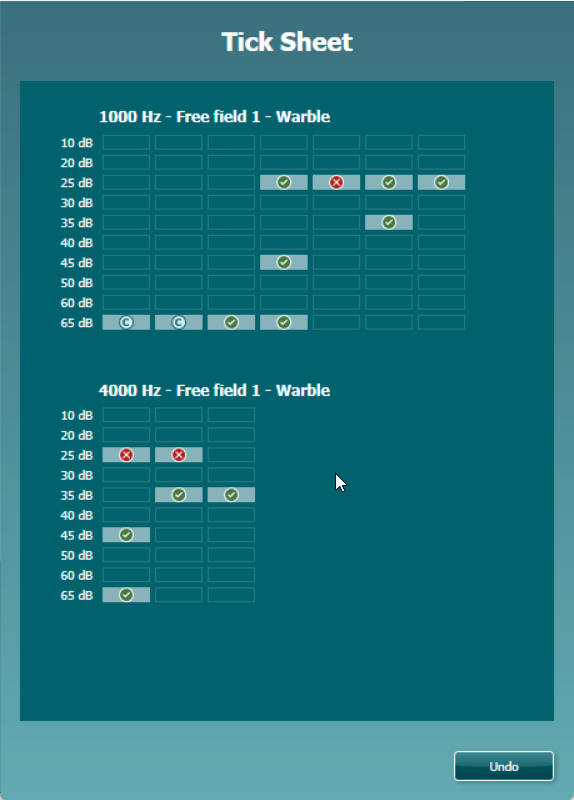
To begin with, your goal is not to establish thresholds but to make the sound noticeable enough to capture attention and build the initial response. Therefore, start at a clearly audible (suprathreshold) level. In most sound field setups and adjusting for hearing loss, around 65 dB provides a reliable starting point.
4. Keep stimulus and reinforcer synchronized
One of the most overlooked aspects of VRA is timing. For conditioning to work, the sound and the reinforcer need to overlap. If the reward comes after the sound stops, the child may associate it with the wrong cue. Keeping them synchronized maintains the integrity of the conditioned response.
5. Use short, high-impact reinforcement
Long reinforcers may seem more engaging, but they often have the opposite effect. Short, well-timed reinforcers keep the child engaged and curious – thus sustaining attention across more trials.
Pro tip: Aim for brief reinforcers of 0.5-2 seconds.

6. Adapt quickly when conditioning fails
When conditioning isn’t successful, it’s rarely due to just one factor. The solution often lies in simple adjustments, such as:
- Increasing intensity
- Changing frequency
- Or switching to a different reinforcer
Introducing vibrotactile stimulation can also provide valuable insight. If a child responds to vibration but not sound, it may point toward an auditory issue rather than a developmental one.
7. Minimize habituation
Habituation (decrease in responsiveness) is inevitable, but how quickly it happens depends on your strategy. Using larger step sizes initially and focusing on clinically relevant frequencies allows you to gather meaningful information faster. This approach reduces unnecessary trials and helps preserve the child’s engagement.
Other tips to minimize habituation include:
- Limit unnecessary repetitions
- Use 20 dB down / 10 dB up approach
- Introduce new reinforcers mid-test to restore attention
Taking a ten-minute break has also been shown to help recover from habituation, with more responses obtained after the break [1].
8. Use no-sound trials to verify reliability
The use of no-sound trials can help to judge when the child is producing false-positive responses, where they produce a head-turn response, but not directly in response to the sound presentation. This can happen when the child is not sufficiently engaged in a central play activity or is not well conditioned to have associated a strong link between the sound and the response.
Incorporating no-sound trials provides a simple way to check whether the child is responding to sound or guessing/checking. Keeping false positives low gives you greater confidence in your findings.
Pro tip: Aim for a false-positive rate of below 30%.
9. Maximize engagement over distraction
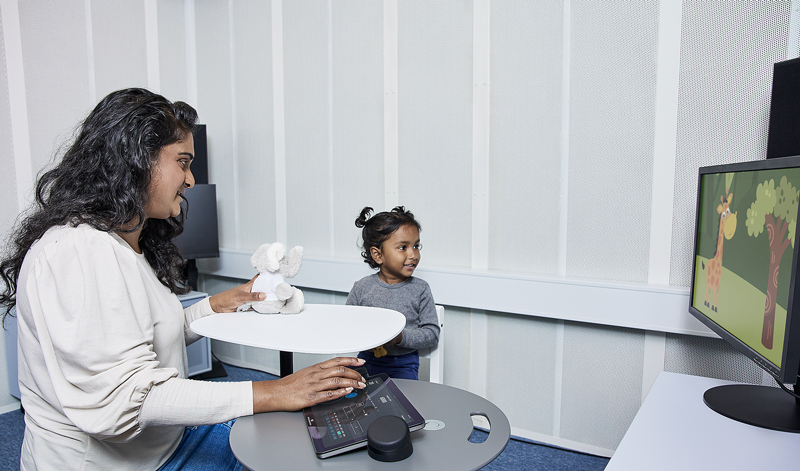
A well-engaged child is less likely to guess and more likely to provide true responses. This is where the second tester plays a critical role, creating an interactive and developmentally appropriate activity that keeps the child focused until a sound captures their attention.
Read more: The role of the second tester in VRA
10. Use the right tools
Pediatric audiometry has developed significantly in recent years. Testing children requires more than accurate stimulus delivery – it demands flexibility, engagement, and efficient workflows.
PC-based clinical audiometers like the Equinox Evo support pediatric testing by bringing together:
- VRA
- Play audiometry
- Automated ticksheets
- Pediatric-specific stimuli
By combining these tools on one platform, the Equinox Evo reduces the need for multiple devices. This helps you stay focused on the child rather than the equipment.
Small changes, big impact
Simple techniques can dramatically improve the number and quality of responses you get in VRA.
Taking a short break at the right moment can restore attention and extend the session. Using more than one reinforcer can increase motivation. Introducing something new when attention drops can quickly re-engage the child. And the list goes on.
Individually, these adjustments may seem small – but together, they can significantly improve outcomes.
Want to refine your VRA technique in clinical practice?
Learn how to elevate your VRA technique in our course:
References
[1] Thompson, G., Thompson, M., & McCall, A. (1992). Strategies for increasing response behavior of 1- and 2-year-old children during visual reinforcement audiometry (VRA). Ear and hearing, 13(4), 236–240.